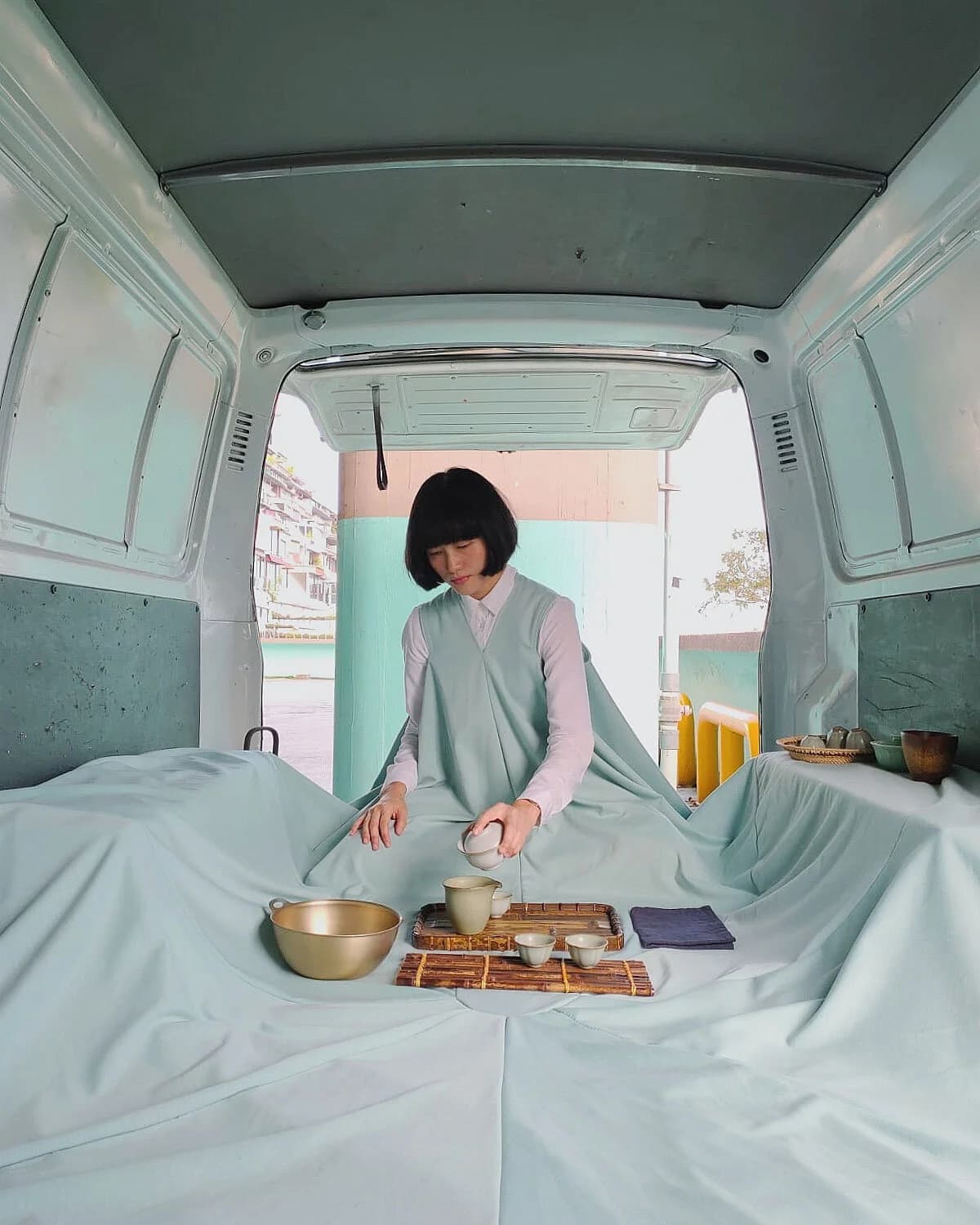
Person performing a tea ceremony inside the back of a van, surrounded by soft draped fabric, carefully pouring tea into small cups arranged on a tray in a calm, intimate setting.
7 min

The Makers Behind the Directory: Ten Artists You Should Know

By WeDirectory

Top contemporary artists to watch: discover painting, sculpture, installation, and multidisciplinary artists worldwide on WeDirectory’s global art platform.

By WeDirectory

WeDirectory is proud to introduce ten remarkable artists who call our platform home.

Spanning Lisbon, Paris, Newcastle, Shenzhen, North Wales, Sydney, Berlin, and beyond, these artists work across painting, installation, sculpture, performance, sound, and moving image. Some turn to ritual and participation, others to technology, landscape, the body, or the quiet charge of everyday life. What connects them is not a single style, but a shared depth of practice — work shaped by study, experimentation, and a serious commitment to form.

Together, they reflect the kind of artistic community we care deeply about: international, multidisciplinary, and grounded in genuine ways of seeing. We are proud to share their work and stories with a wider audience — and hope you discover artists here whose practice you’ll want to follow more closely.

Featured artists:

Branca Cuvier, Alexis Puget, Rachel Milne, Aiwei Foo, Ko Ushijima, Constantin Hartenstein, Gabriella Rhodes, Maria Jose Benvenuto, Bai Zhiwei, Helen Beard.

Branca Cuvier

Branca Cuvier works from Jiboia Studio in Lisbon, a space she founded in 2020 that opens to the public twice a year — a gesture that reflects how she approaches art itself. For Cuvier, the work is not fully complete until it is encountered, shared, and brought into conversation.

Trained at Ar.Co in Lisbon and the Gerrit Rietveld Academie in Amsterdam, she works across drawing, painting, and sculptural experimentation. At the centre of her practice is the human body — not as a fixed form, but as something shaped by emotion, perception, and internal states. Drawing on references from psychology and anthropology, she translates these into figurative compositions where distortion, rhythm, and colour function as tools of inquiry rather than decoration.
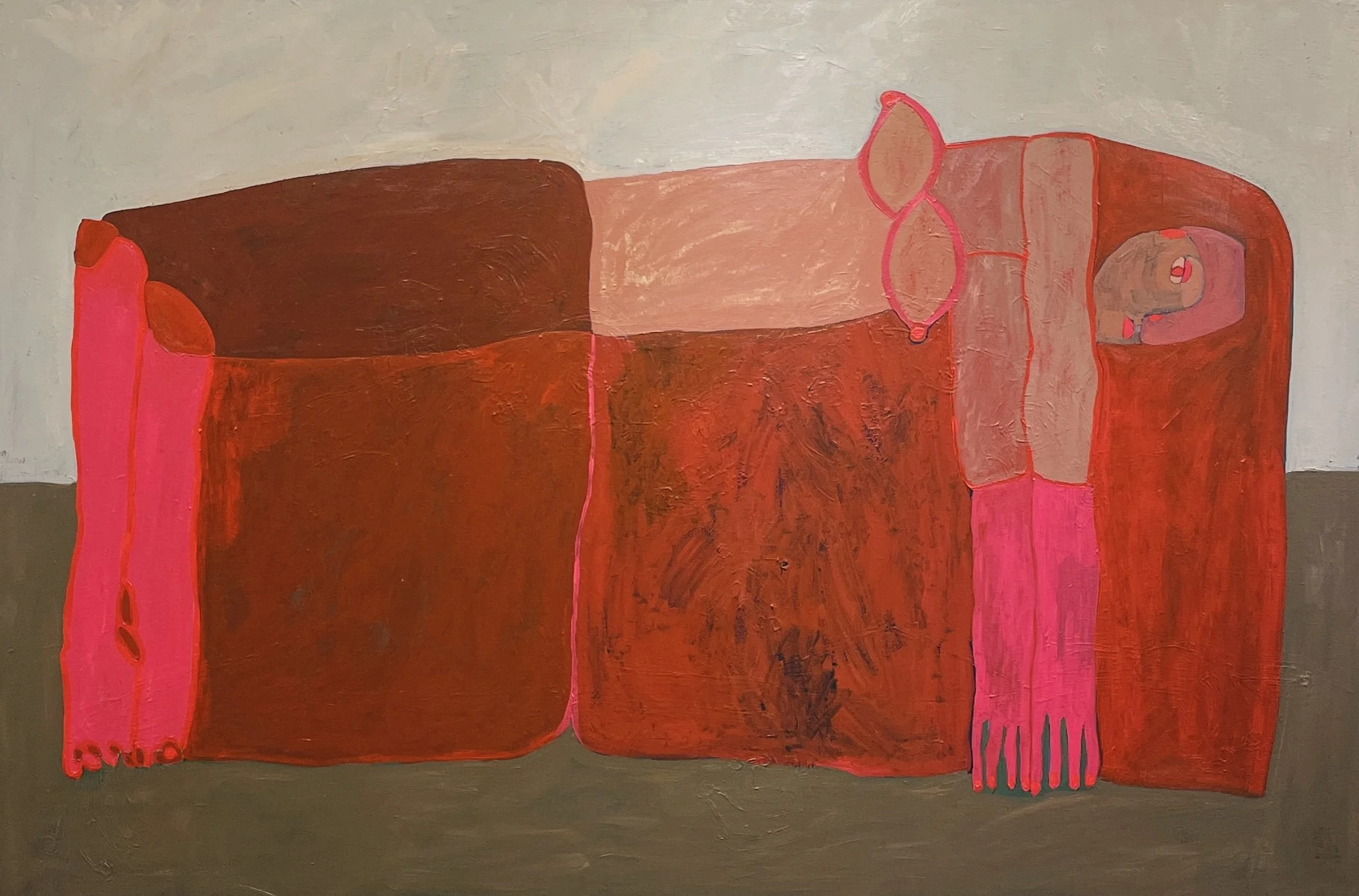
Contemporary figurative painting of a reclining human figure in warm earthy tones with vivid pink accents, simplified forms, and textured brushwork, set against a muted background.

There is a balance in her work between structure and vulnerability. Forms stretch, compress, and reconfigure, yet remain grounded in a sense of presence. Gesture becomes a language, and feeling takes on a kind of architecture — something that can be built, examined, and shared.

Cuvier’s practice sits within a wider shift in Lisbon’s contemporary painting scene, where figuration is being reimagined through more fluid, introspective approaches. Hers is a voice that feels both precise and open — attentive to the complexity of being seen, and of seeing oneself. Her next open studio at Jiboia Studio will take place on 21, 22, and 23 May 2026.

Instagram

Alexis Puget

Alexis Puget was born in Paris in 2000 and lives between France and Germany, with a studio at Artagon Pantin. His installations feel like abandoned film sets: empty clothes, forgotten objects, props from a story that never quite resolved. That quality is deliberate. Puget builds his work from the edges of the internet — the micro-communities, YouTube live chats, pirate radio signals, and niche online mythologies where people construct meaning in the gaps left by mainstream culture. These become the raw material for sculptures, video works, and immersive installations that are simultaneously documentary and fictional, melancholic and strangely tender.
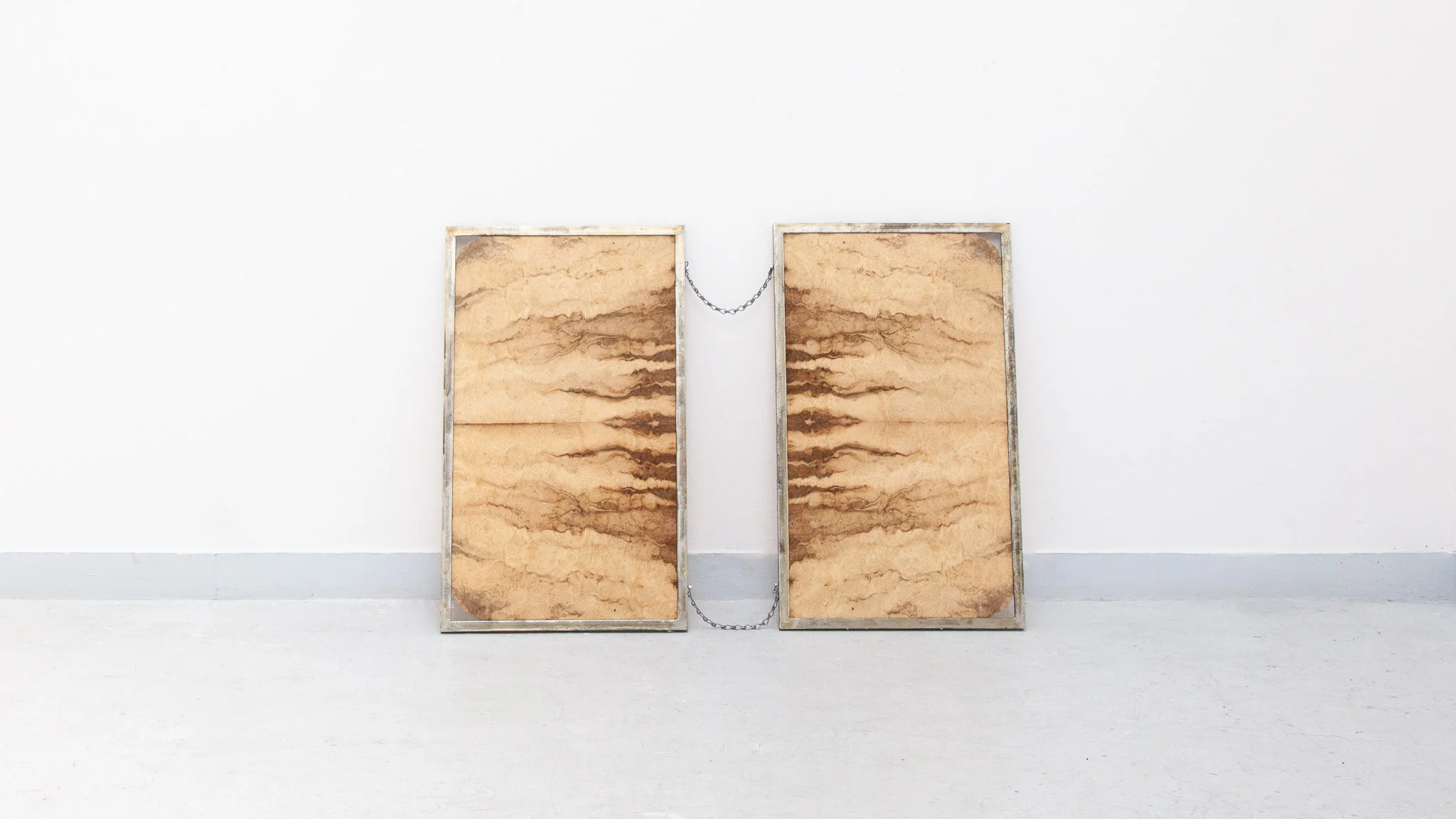
Minimal installation with two rectangular panels featuring marbled, organic patterns, placed side by side on the floor and connected by a small chain against a white gallery wall.

Harold and Maude (2024), 2024. Exhibition view: Playlist for an eternal Autumn, AA, Strasbourg (FR), 2024. Photo © ALLOK7.FR

Trained at the Haute École des Arts du Rhin in Strasbourg and the Staatliche Hochschule für Gestaltung in Karlsruhe, his practice has been shaped by residencies across Europe — at ŁAŹNIA Center for Contemporary Art in Gdańsk, Artagon Pantin, Le Bel Ordinaire, and the Floating University in Berlin, among others. He has exhibited in Paris, Berlin, Venice, Basel, Luxembourg, Munich, and beyond, and has received grants from the Fondation des Artistes and DRAC Grand-Est. He also runs allok7.fr, an IRL/URL curatorial project that hosts screenings and artists' films in institutional margins.

As the director of Kunstverein Freiburg put it, his work brings to mind Kim Stanley Robinson's line: "Science fiction is the realism of our time."

Instagram

Rachel Milne

Rachel Milne paints from life, and she means it literally. Originally from the UK and now based in Newcastle, NSW, she has built her practice around direct observation — setting herself in front of a subject, working through shifting light and the unstable reality of what is there, and finding, as she puts it, “a bit of alchemy” in that encounter. The camera, she says, makes too many decisions on her behalf. She would rather make them herself. 
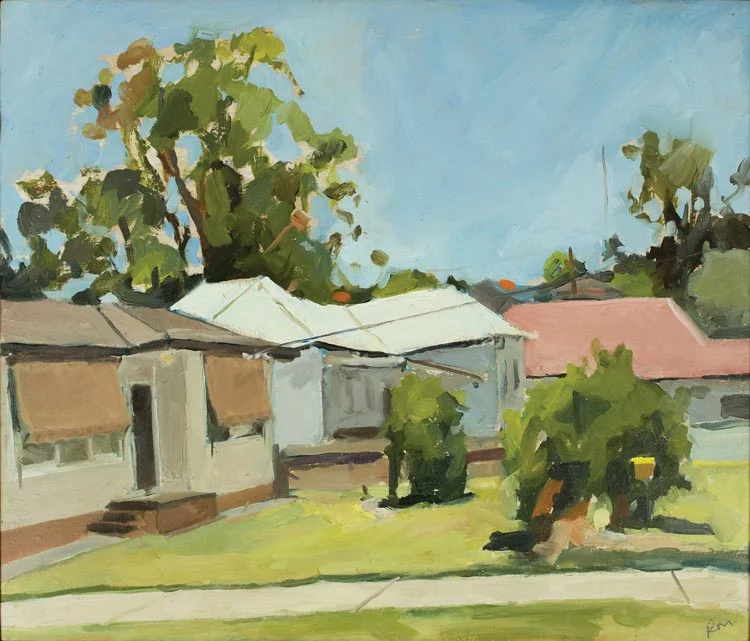
Impressionistic painting of suburban houses with trees and sunlit greenery, rendered in loose brushstrokes under a bright blue sky.

Rachel Milne. Next Door. 2018. 30x35cm. Finalist in the 2018 Wynne Prize.

Milne’s focus is Intimism: the painterly tradition of domestic interiors, quiet rooms, lived-in studios, and the visual texture of everyday life. An unfinished meal, light on a bedside table, the gentle disorder of a working space — these are the kinds of moments her paintings return to. What gives the work its strength is the rigour beneath its calm surface: structure, tone, and colour pursued not as decoration, but as the means by which a painting can truly hold feeling. 

Before moving to Australia, Milne exhibited regularly with the Royal West of England Academy. She is now represented by King Street Gallery on William in Sydney and Sophie Gannon Gallery in Melbourne, placing her within a strong contemporary painting context in Australia.

Instagram

Aiwei Foo

Aiwei Foo was born in Sarawak, Borneo, and her practice has the quality of somewhere that formed her deeply — unhurried, sensory, attentive to ritual and the textures of daily life. Trained across Singapore and Finland, with a Master's in Fashion and Clothing Design from Aalto University, her background is genuinely multidisciplinary: fine art, apparel design, performance, experimental music. Rather than pulling in different directions, these threads have woven into a practice that is coherent precisely because of its range.
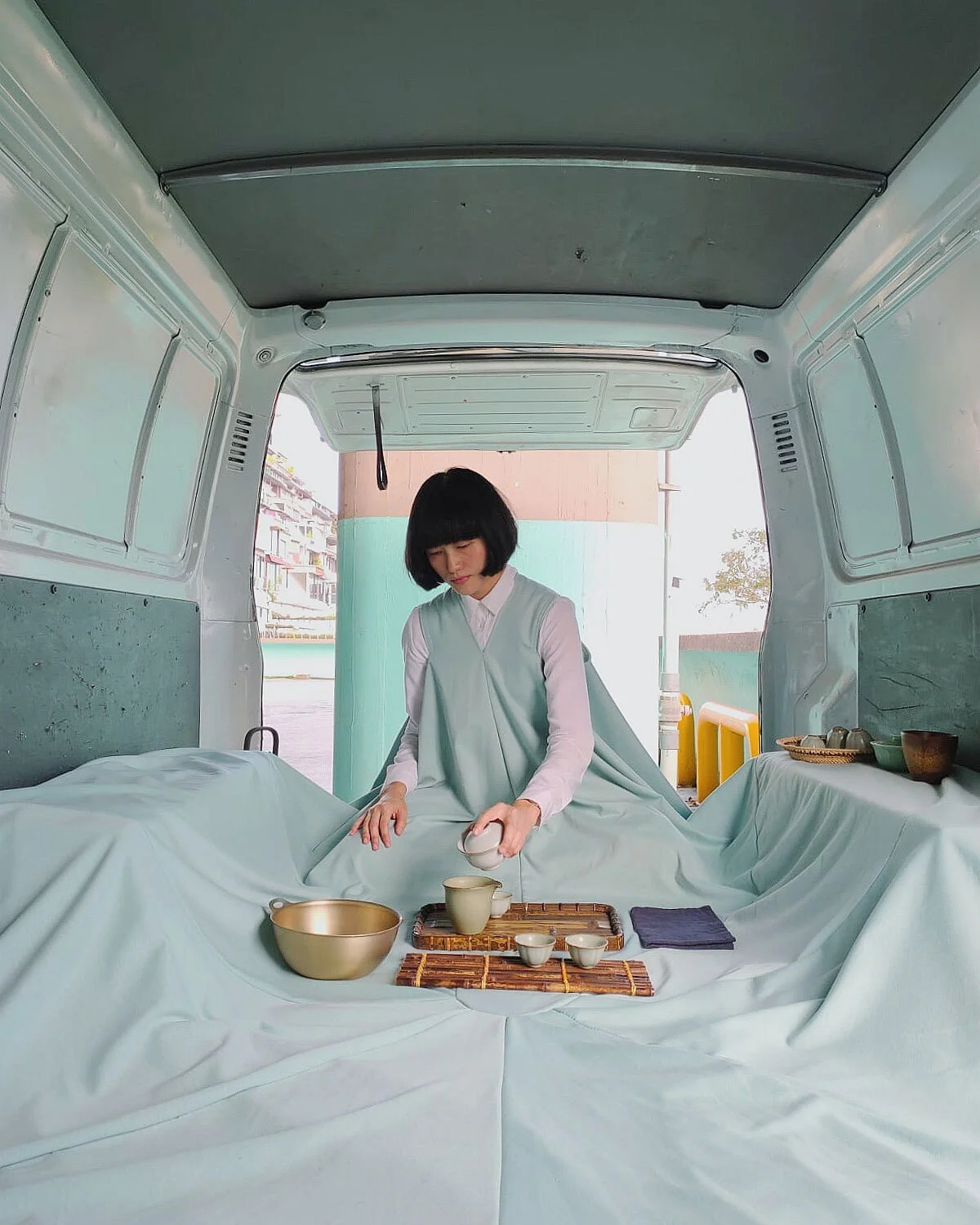
Person performing a tea ceremony inside the back of a van, surrounded by soft draped fabric, carefully pouring tea into small cups arranged on a tray in a calm, intimate setting.

Aiwei Foo. The Tearoom Project.

At the heart of it is Shaman Tearoom, the collaborative project she co-founded that brings together tea ceremony, sound, and live performance as a unified artistic experience. Works like The Tearoom Project and The Beaming Girl Projects extend this into territory that is conceptually careful yet warmly human — spaces for presence and participation rather than spectacle. Her practice also moves fluidly into book design, editorial work, and wearable pieces, reflecting a genuine resistance to fixed categories.

Her accolades include the Masakazu Takei Award and the Judge Prize at Unknown Asia Art Exchange in Osaka, first prize at the Pierre Cardin Design Competition in Singapore, and a nomination as Artist Ambassador for Japan Art Travel by the Japan National Tourism Organisation. Recent exhibitions include Kaleidoscope Japan at the Japan Foundation in Kuala Lumpur and Still Life at The Godown.

Instagram

Ko Ushijima

Ko Ushijima was born in Yokohama in 1980 and has been engaging seriously with art since his teenage years — visiting contemporary galleries, developing his own visual language, and gradually arriving at a question that continues to shape his work: what happens to a visual tradition when the culture around it begins to forget it?
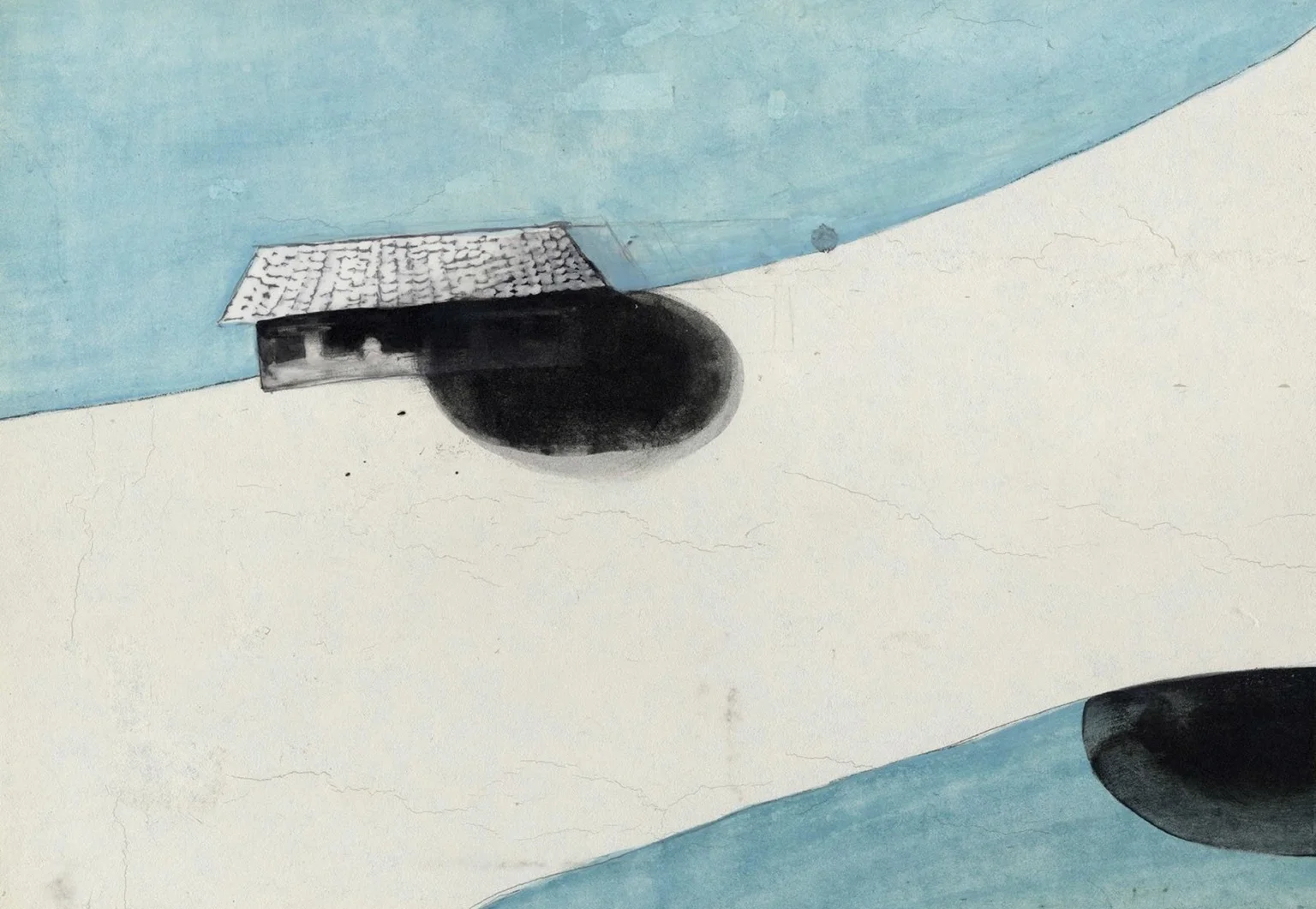
Minimal abstract landscape with a small house-like structure casting a dark shadow across pale terrain, set against soft blue and off-white forms creating a quiet, atmospheric composition.

Ko Ushijima. Paintings. 2010-2012.

Trained at the Kanazawa College of Art, where he majored in traditional Japanese painting, Ushijima’s practice draws from the aesthetics of the Muromachi period — a time when Japan absorbed external influence while forming a distinct visual identity of its own. Rather than treating this inheritance as something fixed in the past, he approaches it as a living framework, one that can still be extended and reinterpreted today.

There is a quiet tension in his work between historical continuity and contemporary presence. While he cites artists such as Anish Kapoor and Michaël Borremans — both attentive to depth, ambiguity, and the weight of human experience — the underlying sensibility remains closely aligned with classical Japanese thought: painting not as declaration, but as reflection. In Ushijima’s work, the image does not insist — it invites.

As he describes it, his aim is to “create a place to reflect upon the existence of ourselves, as we become more globalized and digitized.” In a moment saturated with images, that kind of stillness feels both rare and necessary.

Instagram

Constantin Hartenstein

Constantin Hartenstein lives and works in Berlin, and his practice carries something of the city’s layered, unsettled character. Moving across video, sculpture, installation, and performance, he returns repeatedly to the body — not as a fixed image, but as something shaped by systems of visibility, discipline, optimisation, and desire. Trained at the Berlin University of the Arts and later at HBK Braunschweig, Hartenstein brings a strong conceptual rigour to materials that often feel seductively synthetic: epoxy resin, translucent pigments, polished surfaces, and high-definition moving images that echo the language of advertising, fitness culture, and the screen.
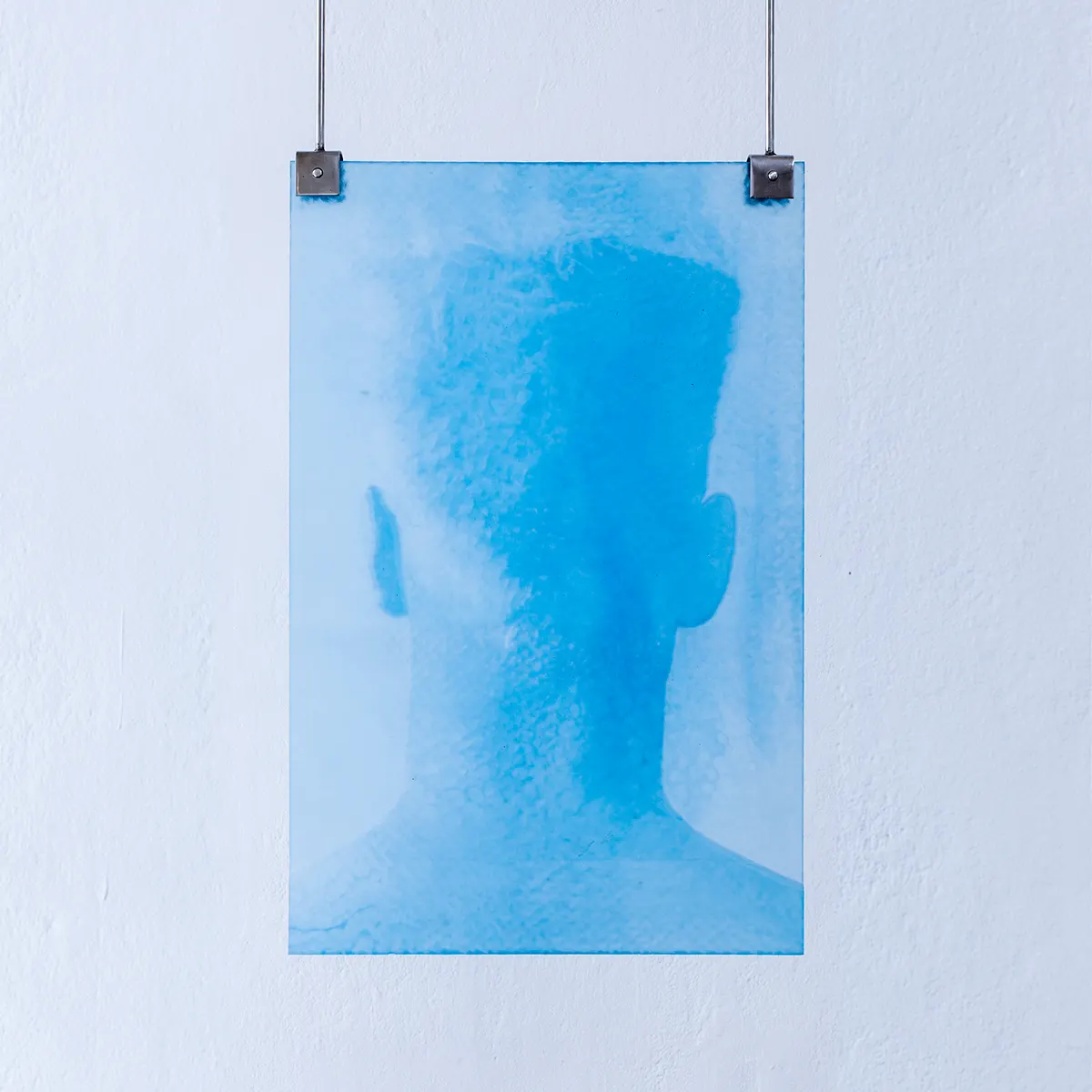
Translucent blue artwork depicting a blurred human head silhouette, suspended from metal clips against a white wall, creating a soft, atmospheric portrait-like image.

Von Hinten I 2022 | epoxy resin, GDR pigments, steel | 75 x 50 x 2 cm | photo Michal Ures I installation view Berlinskej Model Prague I curated by gallerytalk.net & Anton Janizewski

His work has been presented widely in Germany and internationally, across numerous exhibitions and institutional contexts. At its core, the work returns to a distinctly contemporary question: the body as image, product, and interface — and who gets to be visible, and under what conditions.

His upcoming exhibition Prototyp opens on April 30, 2026, presented by Galerie Parterre at the Small Water Reservoir in Prenzlauer Berg — a temporary venue during the gallery’s renovation. The exhibition offers a spatial continuation of his inquiry into materiality, perception, and the coded body.
Instagram

Gabriella Rhodes

Gabriella Rhodes was born in Stoke-on-Trent — a city built on ceramics — and has spent her practice quietly dismantling what that tradition assumes. Based on the Llŷn Peninsula in North Wales since 2020, she has moved away from conventional studio ceramics, with their globally sourced, untraceable clays and industrial glazes, toward something far more rooted: working directly with clom, a mixture of clay-rich earth and straw drawn from the vernacular architecture of the region itself.
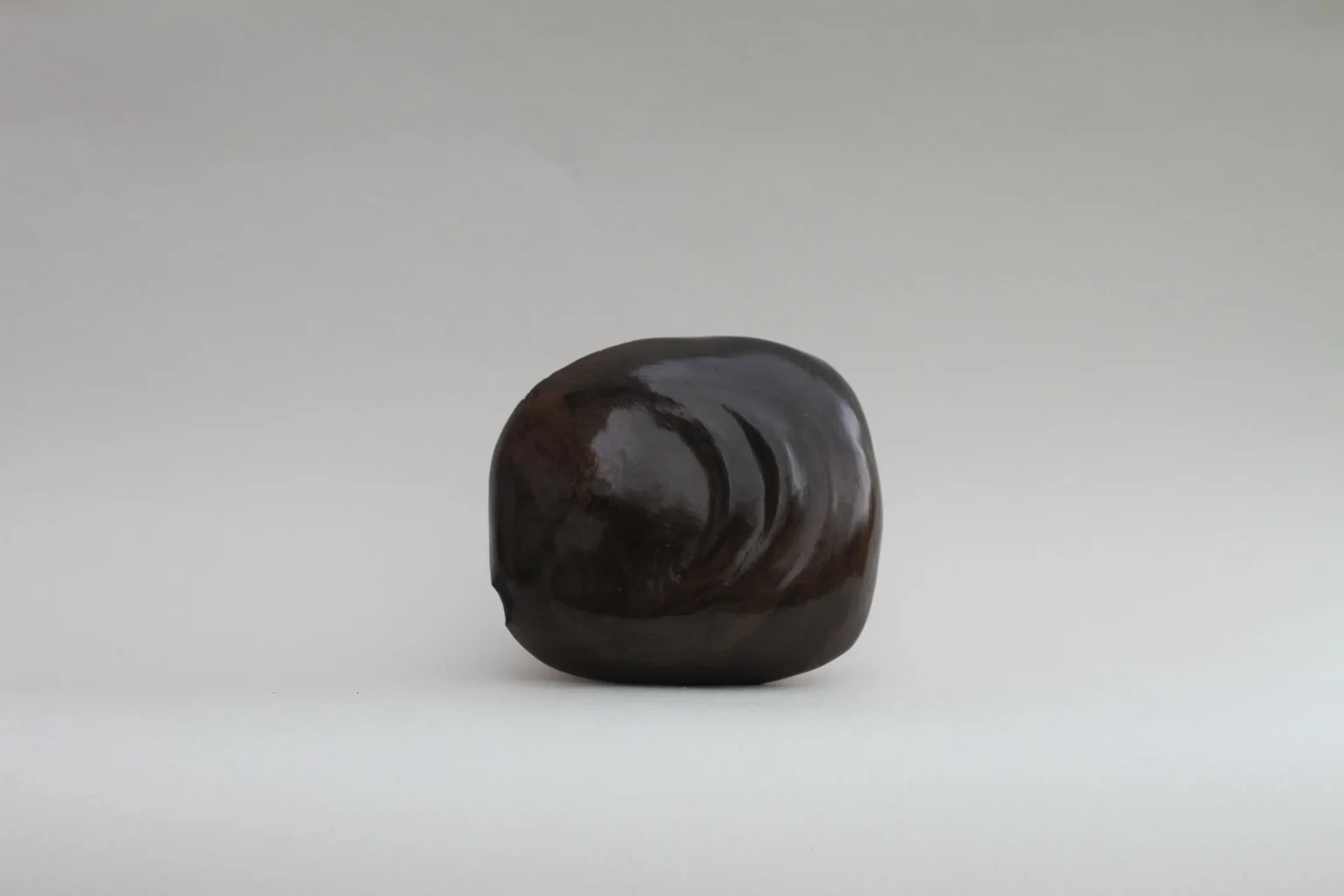
Dark organic sculptural form with a smooth, rounded surface and subtle indentations, resembling a natural or bodily shape, set against a neutral background.

Gabriella Rhodes. Smoke-fired.

Her sculptures are hand-built and unfired, cured with natural oils to a quiet durability that can last centuries, yet designed to be broken down, remade, or returned to the land when the time comes. The process is inseparable from the place — materials gathered after landslips or gifted as waste by local industries, forms shaped by walking, geological mapping, ecological observation, and visits to historical extraction sites. A cloud formation, a tidal rhythm, an undulating hillside: these are not just inspirations but structural influences on what the work becomes.

Rhodes graduated from Manchester School of Art in 2018 and is currently completing an MA in Regenerative Design at Central Saint Martins. She has exhibited at London Craft Week in 2024 and 2025, and at Artistiaid Ifainc Cymru at MOMA Machynlleth. Residencies at Guldagergaard Ceramic Research Centre in Denmark and A-B Projects in Los Angeles, alongside support from the Arts Council of Wales, speak to a practice that is gaining serious international attention. In 2024 she presented her research at Regenerate!, a symposium hosted by the Jan Van Eyck Academie.

Instagram

Maria Jose Benvenuto

Maria Jose Benvenuto grew up in the mountains of Santiago, and when she moved to Sydney in 2018, the landscape cracked something open. Trading the altitude and noise of Chile for the salt-edged quiet of the Northern Beaches, she found herself reconnecting with the natural world in a way that felt entirely new. That reconnection has never stopped. It is the engine of everything she makes.

Abstract composition with looping black lines layered over a pale background, intersecting with bold graphic shapes including a red circle, yellow curved form, and black geometric elements, creating a dynamic, gestural composition.

Maria Jose Benvenuto. View from the lookout. Acrylic on canvas. 120x200 cm. 2022.

Working in acrylic, ink, and watercolour on large-scale linen and cotton, her process is almost choreographic — she moves across the canvas between floor and wall, using her whole body to flick, pour, and layer the paint. A gentle curve becomes a wave. A gestural mark becomes long grass moving in wind. The colours are those of her daily life on North Head: deep oceanic blues, the yellow of Sydney sun, the greens and blacks of bushland. She sometimes leaves the linen raw, the composition deliberately open — she describes herself as a storyteller who lets you become the author.

Educated at the Pontificia Universidad Católica de Chile, Benvenuto has shown at the Leila Heller Gallery in Dubai, The Arx Gallery in London, Sydney Contemporary Art Fair, and Art Basel Miami, among many others. A notable commission took her to Paris, where she painted four ceiling panels for La Plume Paris at the Hotel Madame Reve.

Instagram

Bai Zhiwei

Bai Zhiwei lives and works in Shenzhen, and his practice moves across sound, moving image, technology, and spatial installation. Rather than simply combining disciplines, his work inhabits the unstable edges between them — where perception becomes spatial, memory becomes atmospheric, and technology feels less like a tool than a condition of experience.
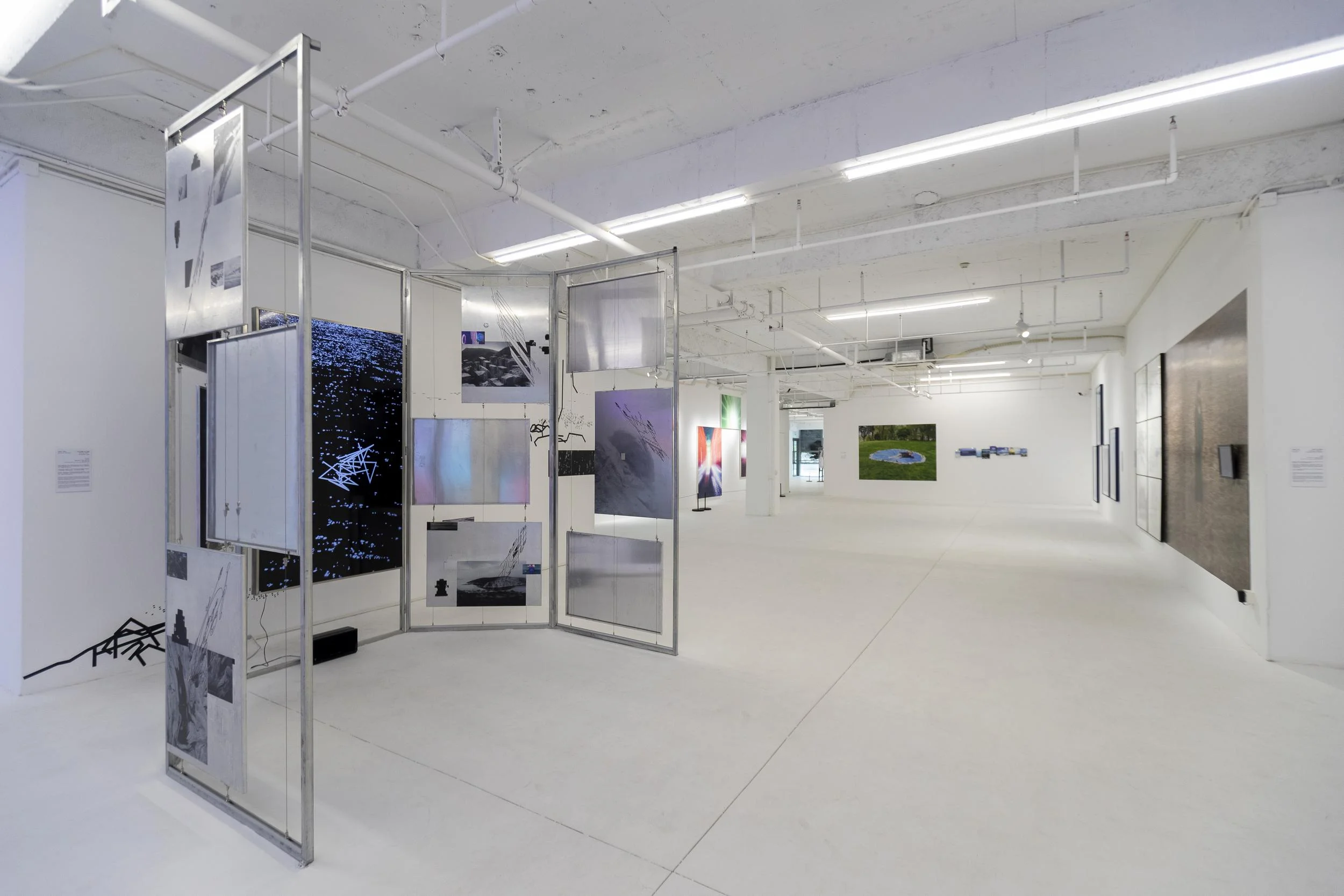
Contemporary gallery installation in a bright white exhibition space, featuring modular metal structures with layered images, digital screens, and large-scale artworks displayed across the room.

Bai Zhiwei. Visual.

Born in 1981, he brings a distinct sensitivity to these questions, creating works that are formally precise yet quietly immersive. His work has been shown widely across China and internationally, including at the Songshan Lake Biennale, Tokyo TDC, and the Art Directors Club of New York, reflecting a practice that continues to expand through cross-disciplinary experimentation and sustained public recognition. Among the distinctions his work has received are the Red Dot Design Award and the iF Design Award. What makes it resonate is its ability to turn abstraction into something bodily felt — not simply an idea about perception, but an environment in which perception itself begins to shift.

Instagram

Helen Beard

Helen Beard came to painting by an unusual route: fifteen years as an assistant art director in the film industry, while sustaining her own practice in painting, collage, and needlepoint alongside it. That cinematic sensibility still lingers in the work. Her compositions often feel framed like scenes — moving between the intimacy of the close-up and the composure of the wide shot, with the logic of the camera applied to bodies, colour, and touch.
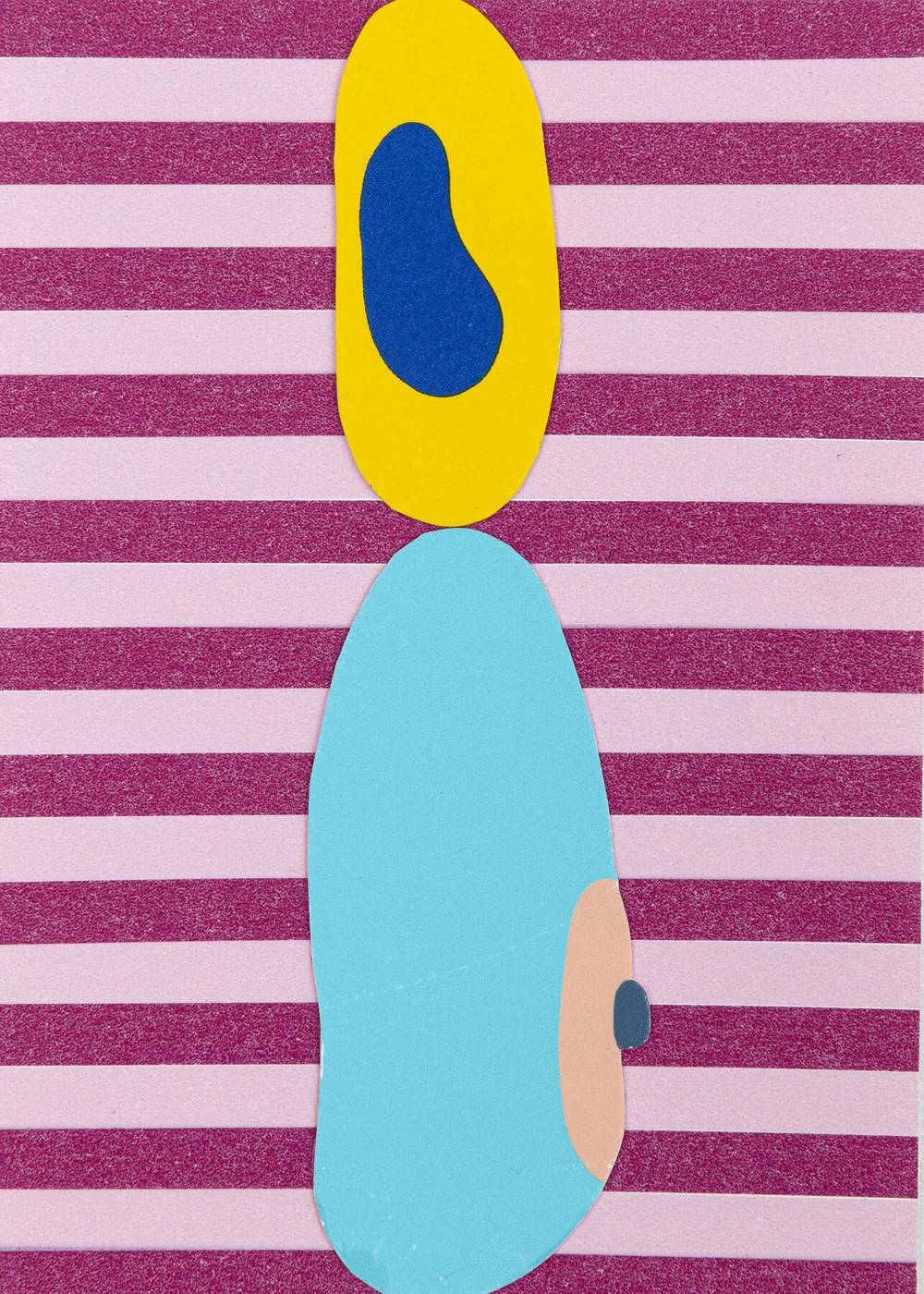
Colorful abstract composition with layered organic shapes in yellow, blue, and turquoise arranged vertically against a pink striped background, creating a playful, graphic figure-like form.

Helen Beard. Collage.

Intimacy is central to Beard’s practice, but she approaches it without apology or provocation for its own sake. Instead, her paintings unfold through a vivid, confident palette and brushwork that feels almost tactile. Colour and form merge into something sensual, rhythmic, and unmistakably alive.

Since leaving the film industry, her exhibition history has gathered real momentum. Solo presentations include It’s Her Factory at UNIT London in 2019, The Desire Path at Reflex Amsterdam in 2020, Lyrical Lines at Paul Stolper Gallery in 2021, and The Tulips Are Too Excitable, It Is Winter Here at Reflex Amsterdam in 2022–23. Her work has also appeared in group exhibitions at Newport Street Gallery and UNIT London, placing her within a wider conversation around contemporary figuration, sexuality, and the politics of looking. 

What makes Beard’s work compelling is that it never feels defensive. It claims pleasure, colour, and erotic charge as serious painterly subjects — and does so with clarity, confidence, and joy.

Instagram
Author

WeDirectory

Date

13.04.2026

Tags
Art & Illustrationcontemporary artistsglobal artistsemerging artistsmultidisciplinary artcontemporary paintinginstallation artsculpture artistsperformance artdigital artsound artvisual art platforminternational artistsmodern art sceneartists to watchcontemporary art 2026WeDirectory artistsglobal art communityfine art practicesexperimental artart exhibitions worldwide
Craig Follett, CEO of Peggy, hanging abstract geometric painting on white gallery wall
7 min

How Peggy Opens Art to New Generations and Reshapes the Market: Interview with the CEO Craig Follett

By Claudia Bigongiari

Peggy's CEO Craig Follett on how digital authentication and artist royalties are transforming art collecting into an open, liquid market for everyone.

Craig Follett, co-founder and CEO of Peggy, shares the vision behind this innovative art marketplace designed to create a new, inclusive economy where everyone, from first-time collectors to established artists, can participate safely and confidently. Conceived by Follett and Adam Meghji in 2020 and launched as a mobile app in 2023, Peggy directly addresses two fundamental questions that were once surprisingly difficult to answer: where to buy art today and what art is right to collect.

Through patented authentication and innovative Digital Fingerprint technology, Peggy ensures verifiable provenance and automatic artist royalties on every resale, transforming the traditionally closed, intimidating art market into an accessible, liquid ecosystem.

Peggy becomes a trusted tool where artists and institutions can thrive together within a transparent, portable market, everything can be easily made through our phone. It fosters close relationships by directly presenting creators, their stories, and the meanings behind their work, while making buyers feel that purchasing art is just the beginning of a journey - always adaptable over time - not the end of their financial commitment. 

In this interview for WeDirectory, Craig Follett reveals the platform's origin story, its deliberate focus on physical art (starting with painting), and the role Peggy plays in empowering younger generations to enter collecting while giving artists long-term control over their work's value.

Three Peggy team members smiling together seated on wooden couch in modern studio space

Peggy Team: Adam Meghji, Bronwyn Hunter, Craig Follett. Image Courtesy Peggy.

What was the origin story behind Peggy? What was the moment or insight that inspired you to build it?

After I sold my first company, Universe, to Ticketmaster, I bought my first house and immediately wanted to fill the walls with original art. Sounds simple enough. But the question of where to buy and what to collect turned out to be surprisingly difficult to answer, even for someone who'd spent years in tech and live entertainment.

I started visiting art fairs, talking to gallerists, and pretty quickly noticed two structural problems in the market. First, high-net-worth collectors had access to a liquid secondary market through auction houses. They could buy a blue-chip piece and resell it whenever they wanted. Everyday collectors had no equivalent. You bought a painting and you were essentially stuck with it. Second, we kept seeing artists whose work was appreciating dramatically on the secondary market. A piece sold for $10,000, then flipped at auction for hundreds of thousands, and the artist saw none of that upside.

The insight that connected these two problems was authentication. Imagine a world where you could reliably verify a physical artwork using just your smartphone, where AI reads the unique surface characteristics of a painting and creates an unbreakable chain of custody. That would give everyday collectors the same flexibility that ultra-high-net-worth buyers have always had: the ability to buy with confidence and resell when life changes. If you look at adjacent markets, that dynamic already exists. Sneakers have StockX and GOAT. Watches have Chrono24. Fashion has The RealReal and Depop. These are all categories where authentication (albeit without Peggy's patented AI authentication) unlocked a healthy, liquid secondary market that benefits both buyers and creators. We saw no reason emerging and mid-career art shouldn't work the same way. And because we control that chain of custody end to end (with patented intellectual property), we can also ensure artists participate in the upside when their work appreciates. That's the core of what we built.

Abstract geometric red blue painting hung in modern white stairwell with second cityscape artwork below

Image Courtesy Peggy

Where does the name Peggy come from? Was Peggy Guggenheim a direct inspiration - and if so, what about her legacy resonated with your vision?

When we were building the brand, we wanted a name that felt warm and approachable. Like a trusted friend who takes your hand and helps you navigate the art market without judgment. Traditional art spaces can feel intimidating: stark white walls, hushed galleries, "inquire for price" on everything. We didn't want a cold tech moniker. We wanted something human.

The name also ties neatly into the product itself. Users curate their favourite works on "Pegboards," and they can listen to artist interviews through our built-in "Pegcasts." There's a natural linguistic thread running through the whole experience.

And on a personal note, my beloved aunt's nickname growing up was Peggy, so it carries some family resonance too.

Peggy is said to be the only platform that builds artist royalties into resales. Can you tell us more about how that works in practice? How frequently do collectors actually resell through Peggy, and is there genuine demand for it? What tend to be the most common reasons people decide to resell art?

It all starts with our patented Digital Fingerprint technology. When an artwork is listed, the artist uses their smartphone camera to scan the physical piece. Our AI captures the microscopic surface details (the depth of brushstrokes, the texture of the canvas) and creates what is essentially an unbreakable digital chain of custody. When a collector later resells that piece on our secondary market, the new buyer scans it on arrival to confirm it's the exact same work. Because we have end-to-end visibility across that transaction, our system automatically routes a 10% royalty: 5% to the original artist and 5% to the original gallery.

Verisart mobile app showing $620 royalties earned on Plants on a Shelf 2020 artwork

Image Courtesy Peggy

People resell art for practical, everyday reasons: they move to a smaller apartment, their taste evolves, they run out of wall space, or they want to free up capital to support a different emerging artist. These are perfectly normal life events. And what we've found is that knowing this option exists actually makes people more willing to collect in the first place. The ability to resell removes the financial anxiety of that initial purchase. You're not locked in forever. That liquidity changes the entire psychology of buying art.

Peggy offers a range of technology features for artists and collectors. Which ones do you feel make the biggest difference in people's day-to-day experience? Do you have any tools to help artists with pricing - since setting the right price is something so many artists genuinely struggle with?

The feature I'd highlight isn't really about technology. It's about connection. Pegcasts are short-form audio interviews embedded in the app where you hear directly from the artist about the meaning behind their work, their process, their story. Discovering art on a screen can feel flat. But the moment you hear an artist talk about why they made something, there's an emotional shift. It stops being a product and starts being a relationship. That changes how people collect.

For collectors specifically, our "Make an Offer" feature is significant. The art world has historically hidden prices behind "inquire" buttons, which benefits insiders and alienates everyone else. Peggy maintains transparent pricing histories and a public registry of ownership. Collectors can look at comparable sales and current offers, and the ability to bid means genuine market value emerges organically rather than being dictated from the top down. That transparency gives collectors real information to make confident decisions.

On the artist and gallery side, our Send Invoice tool solves a quiet but important problem. If a gallery closes a sale offline, at an art fair or over dinner, they can use Peggy to process that transaction. We waive our standard fee entirely, charging only the 2.9% credit card processing cost, and the artwork gets digitally fingerprinted and registered. For the collector, that means the piece they just bought is now authenticated and can be resold on Peggy in the future. For the artist, it means they're enrolled for their 5% royalty if that piece ever changes hands. Everyone benefits from more art entering the authenticated ecosystem.

Marcel Breuer Wassily chair beside abstract red painting and rubber plant in bright modern living room

Image Courtesy Peggy

Is it possible to resell on Peggy artwork that was originally purchased elsewhere - not through the platform?

Yes, with an essential step to protect the integrity of the ecosystem. The artwork must first be authenticated and registered on Peggy. Think of Peggy as a digital catalogue raisonné for our vetted artists. If an artist or gallery sells a piece privately, they can use our tools to scan the physical work, create its Digital Fingerprint, and associate it with the buyer. Once that provenance (the verified history of who owned the work and when) is established in our system, the collector gains the full flexibility of Peggy's secondary market. They can list and resell that artwork whenever they choose, with the confidence that it's been authenticated and that the transaction is secure.

What are your priorities for improving Peggy going forward? How closely do you engage with your users, and what are the most common things they're asking for?

We engage with our community constantly. It's one of the advantages of being a relatively small, focused team that genuinely cares about this space.

The most consistent thing we hear from collectors is that they want more. More artists, more inventory, more content, more Pegcasts, more ways to learn about the artists they're following. That's a healthy signal. It tells us the core experience is working and people want to go deeper.

On the community side, we're seeing growing demand for social features: collectors wanting to share their collections, compare notes, discover new work through each other. That kind of peer-driven discovery is something we think about a lot. When a collector you respect adds a new piece to their Pegboard, that signal carries weight. Building on that social fabric is central to what comes next.

What is the single most valuable piece of advice you would give to artists today?

Take ownership of your provenance and your secondary market from day one. Don't wait. Provenance is the documented chain of ownership and authenticity for an artwork, and historically, artists have had almost no control over it once a piece leaves their studio.

For a long time, artists have been told to focus on the primary sale and let everything downstream take care of itself, which usually just means auction houses and flippers capture the upside. That's changing, and artists have more tools available to them now than at any point in history.

Concretely: document your catalogue raisonné digitally, authenticate your sales, and partner with platforms that guarantee you royalties. Treat your career as a long-term body of work, not a series of one-off transactions. You are the one building the value of your market, and you deserve to share in that value as it grows.

Colorful abstract geometric shapes print in white frame hung between two windows with monstera plant

Image Courtesy Peggy

How do you see Peggy's role in helping younger generations take their first steps into art collecting?

Younger collectors are culturally engaged and financially literate, but they expect asset classes to be transparent, digital-first, and liquid. They manage investments from their phones. The traditional art market is the opposite of all of that: opaque, analog, and illiquid. There's a fundamental mismatch.

What Peggy does is translate fine art into the kind of experience younger people already trust. Social curation, audio storytelling, transparent pricing, a clean mobile interface. But the thing that really unlocks participation is the secondary market. Spending $1,000 on a painting is a meaningful commitment for most people, and it's a much harder decision if you believe you're stuck with it forever. The moment a collector knows they can resell that piece securely if their life circumstances change, the calculus shifts. The intimidation drops. They take the leap, they support a living artist, and they start building a collection.

We want people to feel that buying art is the beginning of a journey, not a financial commitment they can't undo. That shift in mindset is what opens the door.

Date

06.04.2026

Tags
Digital Media & Technologyart marketplaceart collectingartist royaltiesart authenticationdigital fingerprintsecondary art marketemerging artistsart technologyart investmentmobile art appart provenanceCraig FollettPeggy appart resalenew collectorsart fintechliquid art marketart platformart startupcontemporary art market